

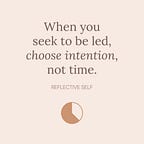


“When you seek to be led, choose intention, not time.”
This is a lesson from a lived experience, not a universal prescription.
I am transported back to the caves of the Peruvian temple, where Indy finds himself escaping a rolling, 22-foot boulder on the hunt.
So many emotions are evoked in just that single scene.
Threat.
Danger.
Survival.
Fear.
Urgency.
All present as high stakes in a race against time.
And if we were to replace the massive boulder with a palm-sized, ticking clock, those same emotions would still persist.
We find ourselves navigating a life where time is stitched into every lining.
From imposed deadlines to a mortality constantly left in question, time governs not only how we live, but also how we perceive ourselves.
The dream career by 20.
The life partner by 25.
The settled life by 30.
A measure that isn’t freely chosen, but socially constructed.
One that has been collectively rehearsed.
Time is almost akin to an ominous shadow, watching with scrutiny.
And it begs the question:
What happens when we are unable to live up to its standard?
Does our worth become the price of admission?
In a world that reveres speed, output, and publicly celebrated milestones, moving at a pace of self-trust can feel foreign. Absurd, even.
It asks that we opt for steadiness rather than the timeline.
To trust that not all quiet seasons are unproductive.
To trust our own pace and what we deem aligned, even against the storm of the status quo.
To trust that what we build in measured increments will eventually reveal itself, even if it remains painfully invisible in the moment.
What if we chose to let our intentions take the lead?
To allow our inner compass to steer the way.
Where time is asked to serve us, instead of scare us.
Where time becomes a tool for discipline, not a source of pressure.
For intention, in itself, doesn’t lengthen time; it protects it.


